Leadership Facilitator · Consultant · Educator · Coach
Leadership · Human Performance · Futures & Foresight
I help people, teams and organisations develop the human capacities that enable exceptional performance.
With a Doctorate in Business Leadership and 15 years of global experience across leadership, coaching, education and human performance, I bring rigorous research and practical experience together to help people think more clearly, feel their best and perform their best and navigate complexity and change.
1K+ clients
coached
10 years applied research
15 years global experience
TRUSTED BY:





Need an experienced leadership practitoner?
I really enjoy the challenge and stimulation of working with different people, teams and organizations around the world and across different sectors. To be trusted to step in, quickly understand the context and make meaningful progress,
I work with organisations that need an experienced leadership practitioner for a workshop, program, leadership team, executive cohort, strategic process or longer-term engagement.
I can facilitate what you've already built, strengthen what isn't working, or work alongside you to create something new.
Helping people and teams feel their best and perform their best
My specialist work in human performance brings together the science of flow, leadership, attention, creativity, learning and team performance.
I'm interested in what allows people to do exceptional work — and what organisations can do to create the conditions for it.
-
Understanding the conditions that enable individuals and teams to enter, sustain and reproduce states of exceptional performance.
-
Developing the capabilities that allow people to lead themselves and others, adapt, make decisions and perform under pressure.
-
Helping people understand and work with the conditions that support deep focus, creative thinking and meaningful work.
-
Turning research into practical learning experiences that change how people work, learn and perform.
-
Helping leaders and teams maintain clarity, adaptability and effectiveness when the stakes are high.
VIRTUAL · IN–PERSON · HYBRID
Ways to work with me
Embedded Consultant
Work alongside your organisation or leadership team for a defined period, providing senior capability across leadership, culture, performance and development. I work alongside leadership teams to explore challenges, build capability and turn ideas into practical action.
Engagements can be short-term, project-based or fractional and embedded.
Leadership Facilitator
I facilitate leadership and professional development programs for organisations, universities, learning providers and professional audiences.
This can mean stepping into an established program and delivering your curriculum, adapting an existing learning experience, or designing and facilitating something specifically for your people.
Executive Education
I teach and facilitate learning for experienced professionals and leaders across areas including leadership, human performance, organisational behaviour, self-leadership and flourishing.
I bring the depth of doctoral research together with practical experience working with leaders and professionals in high-performance environments.
Executive & Group Coaching
Structured coaching for leaders and teams seeking greater clarity, capability and effectiveness.
My coaching sits within a broader understanding of leadership, relationships, performance and the systems in which people operate.
Program Training & Facilitation
You may already have the program. You may simply need the right person to deliver it.
I work with leadership-development organisations, training providers and learning teams that already have strong content but need an experienced practitioner to bring it to life.
You may have:
A proven curriculum
A facilitator guide
A leadership program
An executive education offering
A cohort-based experience
I can step in, learn the material, understand the intended outcomes and deliver an engaging, intelligent learning experience — in the room or on the screen.
I can work within your existing methodology and brand, while bringing my own experience in leadership, human performance, coaching and adult learning.
Virtual · In-person · Hybrid
How I can help
-
I work with leaders and teams to develop the capabilities they need to lead effectively in complex and changing environments.
Leadership capability
Self-leadership
Team development
Leadership transitions
Culture and capability
Leading through change
-
Work alongside your organisation or leadership team for a defined period, providing senior capability across leadership, culture, performance and development. I work alongside leadership teams to explore challenges, build capability and turn ideas into practical action.
Engagements can be short-term, project-based or fractional and embedded.
-
I design and facilitate experiences that help people think clearly, have better conversations and turn insight into action.
Leadership workshops
Team offsites
Strategic conversations
Team performance
Human performance
Flow
Creativity and learning
Complex decision-making
-
I teach and facilitate learning for experienced professionals and leaders across areas including leadership, human performance, organisational behaviour, self-leadership and flourishing.
I bring the depth of doctoral research together with practical experience working with leaders and professionals in high-performance environments.
-
You may already have the program.
You may simply need the right person to bring it to life.
I work with leadership-development organisations, learning providers, universities and organisations to design, facilitate and deliver learning experiences for leaders and professionals.
I can develop something with you, strengthen an existing program or step into an established program and deliver it within your methodology.
Virtual · In-person · Hybrid
-
I teach and facilitate for professionals, leaders and postgraduate audiences, and work one-to-one and with groups through executive and leadership coaching.
Leadership
Human performance
Self-leadership
Organisational behaviour
Flow
Team performance
Executive development
-
For organisations that need deeper or longer-term support, I work across leadership capability, human performance, organisational development and strategic thinking.
Project-based
Contract
Associate
Longer-term engagements
-
FUTURES & FORESIGHT
Helping leaders think beyond the immediate horizon.
Alongside my work in human performance and leadership, I work with organisations to explore uncertainty, challenge assumptions and think more effectively about what comes next.
Futures thinking
Strategic foresight
Scenario exploration
Emerging trends
Leadership in uncertainty
Future-oriented strategy
This work is particularly useful when organisations are navigating significant change, making strategic decisions or preparing for multiple possible futures.
A BIT MORE ABOUT ME
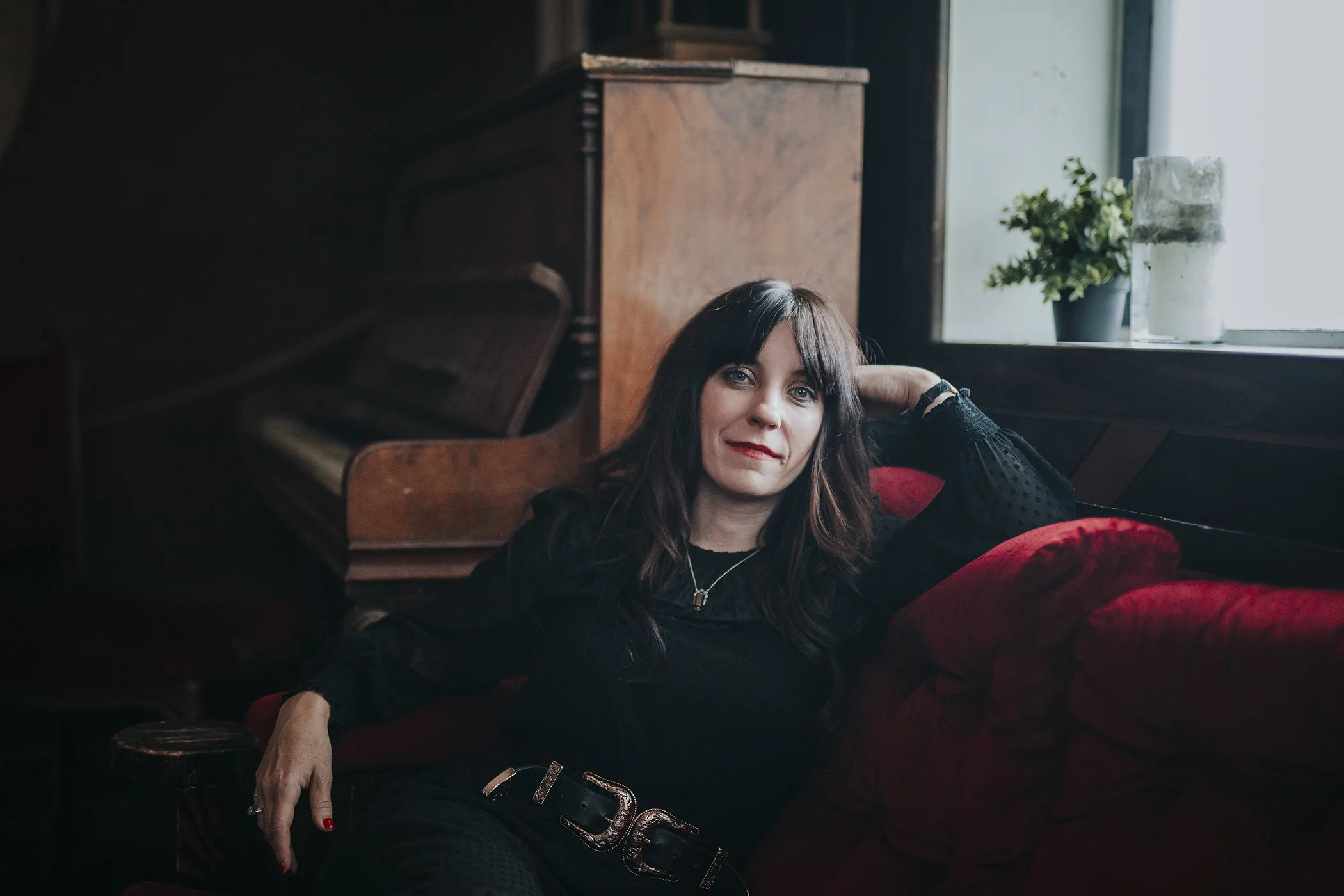
Dr. Clare Sarah Goodridge
We're living through a liminal moment.
AI can now do more of the cognitive work than most of us expected — and yet the conditions that let people, and the wider web of life, actually flourish are as complex as they've ever been.
The human spirit is a remarkable, unruly thing. Its gift is recalibration — integrating what's hard, and growing from the new baseline it creates.
The most important work of our time isn't technological. It's human. It's growing people who can think at a systems level, lead with wisdom, and make decisions in kinship with land, wildlife, technology, and each other — decisions that let our planet, not just our organisations, flourish.
I've spent my career at the intersection of leadership science, flow research, and a single animating question: what does it actually take for all life to flourish?
That inquiry took me from the Flow Research Collective — where I trained and coached over 200 peak performance coaches — to founding The Future of Flourishing and Hearth, and to developing the Human Fluency Framework: a methodology integrating flow science, nervous system regulation, and behaviour change, built for exactly this moment.
This work has changed the people and organisations I've worked with. It's proof that human beings still have the capacity to surprise one another — to build love, patience, vitality, and tenacity in relation, together — and to turn something incredibly difficult into something unusual, beautiful, and deeply human. Moments that spark real energy, and remind us of love, wisdom, possibility, and meaning — an invitation to think a little bigger about what's possible, together with the land and life around us.
I bring doctoral-level rigour, warmth, and an unshakeable conviction: developing our inner human capacity, in relationship with each other and the more-than-human world, is vital — individually and collectively.
Clients I’ve partnered with: Accenture · Meta · Google · Microsoft · Disney · Mirantis · Bauhaus · Singularity University · San Francisco Police Department — alongside artists, Navy SEALs, politicians, Silicon Valley founders, and many, many artists, creatives and social entrepreneurs.
Doctorate of Business Leadership
MA Arts Management & Cultural Policy
BA Communications
Diploma Fashion & Textiles
Certified Executive Leadership Coach
Certified Philosophical Health Counsellor
Founder, The Future of Flourishing
Co-founder, Hearth Leadership
Crisis Line Volunteer
Board Director, Flourishing Business CoLab
Board Member, Sanctuary for Sentient Beings
Board Committee Member, Vet and Animal Care
Radio Presenter, RTRFM 92.1
IN THEIR WORDS…
The rare combination of intellect, humour and heart.
-
![]()
DR. MICHAEL MANNINO
NEUROSCIENTIST, PHILOSOPHER & COACH
Clare has the perfect blend of intellect and heart, a rare combination: knowledge, and empathy. Her knowledge of the science of flourishing, human potential, positive psychology, and flow science is vast, and her vision for developing a world where humans can flourish will have great impact. Among Clare’s true gifts, is her singular ability to create and foster trust and psychological safety among people she works with. I have personally seen how her wealth of experience, true passion and purpose, and deep scientific expertise has helped many people.
-
![]()
DR. SARAH SARKIS
CLINICAL PSYCHOLOGIST & CHIEF OF PERFORMANCE
Clare is one of those rare people who embodies equal parts intelligence, vulnerability, strength and humor. She coaches with her whole heart. Her depth of knowledge, her commitment to science & her deep understanding of human psychology all contribute to her unique style of coaching. My advice- hire Clare if you’re truly invested in transformation. You won’t regret it.
-
![]()
RIAN DORIS
CEO FLOW RESEARCH COLLECTIVE
Clare’s incredible work ethic, loyalty and commitment to impacting clients was a cornerstone of us being able to build Flow Research Collective so quickly. This desire to serve—even in the throws of startup conditions—was crucial. Clare single-handedly served all of our first ~1000 clients. She built programs rapidly and supported me in developing Zero-To-Dangerous, our foundational product which has generated ~$15M+ in revenue. The sheer volume of work Clare embraced, and accomplished working with us is mind-boggling to reflect on.
-
![]()
JEANNIE CHAMBERLAIN
INTEGRATED COACH
Clare is a force of nature. She has an amazing ability to help you see more clearly and realize potential you didn’t know you had. The safe spaces she creates allow you to feel heard, seen and appreciative for who you truly are. Clare’s presence powerfully penetrates every room, she walks into transforming it for better.
-
![STONE PERALES]()
STONE PERALES
ART DIRECTOR
I recently had the opportunity to work with Clare and not only was her group coaching well structured, helpful, and engaging, what impressed me the most was her ability to connect and help people through a gentle, patient, and intelligent approach. She has a warm, welcoming presence, and in addition to bringing relevant research to her coaching, her network of subject matter experts is very impactful. I’ve come to know Clare as a brilliantly educated person, who is wholly committed to the art of helping people through her research and life experience.
-
![]()
DYLAN LAMB
SOCIAL ENTREPRENUER
Clare is my flow coach, advisor and dear friend. She's helped me to realise my true potential as an entrepreneur and designer; in both my life and my work. Her council, coaching and friendship is invaluable. She is the toki (とき) ~Japanese word for time dealer from the future, I often master moments in my life and think of her afterwards. Get a toki dealer and badass in your life like Clare.
-
![]()
ADAM R. BROWN
LEADERSHIP CONSULTANT
Clare has a wonderful sense of empathy combined with deep knowledge of cognitive science & positive and humanistic psychology. Her coaching methods hold space with the appropriate encouragement to reach for solutions and act on them. Plus, her understanding human of behaviour within social systems is incredibly useful!
-
![]()
RAIZA SALI
PEAK PERFORMANCE CONSULTANT
When I think of Clare, I see a beautiful heart & a brilliant mind. Her ability to connect on a deeply personal level fostered a sense of trust & mutual respect, creating a strong foundation for our professional relationship. Her unique blend of expertise, empathy, & unwavering support has been instrumental in helping her clients' unlock their full potential & live a more fulfilling & meaningful life.
-
![]()
ALEJANDRO J.
SOCIAL ENTREPRENUER & COACH
Working with Clare was a massive leap in my professional journey, helping me unlock the power of Flow states in both my personal and professional life. During our sessions, I had a breakthrough moment when I shared my struggles with integrating a time management and productivity strategy into my routines. Clare's advice was simple yet profound: "Focus on your strengths first, then tackle your weaknesses." This kind of insightful guidance was a regular occurrence throughout our coaching. Clare is not only an incredible coach & trusted colleague, but also a community builder for those of us looking to thrive
-
![]()
STEVE ZEIGAR
ENTREPRENEUR & SYSTEMS THINKER
Clare was my coach in various capacities for many years. She is very sensitive to people's emotional needs while not losing sight of business necessities and "holding your feet to the fire" as needed. She always meets you where you are at and helps you find the next meaningful step.
-
![]()
PAULINE DUGOULD
CREATIVE FOCUS COACH
I equate Clare community, care and collaboration. The level of heartfelt understanding that Clare brought to every digital online group interaction has been truly inspiring. She firmly held the threads of connection among all who were present on virtual calls. If there is such role in the world as leading the gentle change of self awareness, compassion and kindness - Clare is an ambassador to that. She carries within her the seeds of awakening to our inner aspects that have laid dormant in the face of the masculine corporate world of agendas and structures. She truly shines the light that is an antidote to chaos of burnout, confusion and resistance. If you want someone intelligent who can also hold space, listen to you deeply and understand you at the level you may not even understand yourself - you want to work with Clare!
-
![]()
FRIDA ROBERTS
LEADESHIP CONSULTANT
I am delighted to share my experience with Clare, a truly remarkable person, facilitator and Coach. Clare's ability to create magic and sustain a safe space, individually or in group sessions, is unparalleled. She possesses a unique talent for listening beyond words, gently pushing you forward on your journey while creating clarity and momentum. Clare's approach, grounded in the latest science of human potential, is an absolute game-changer and I can wholeheartedly recommend here.